AI Voice Agent

Built For The Conversations That Drive Your Business

Handle customer service, sales, appointment booking, lead qualification, and distributor engagement through AI voice agents capable of natural, stateful conversations. Built for enterprise operations requiring 24/7 availability, measurable outcomes, and seamless human escalation.

★★★★★

10,000+ Enterprise Conversations Processed • 23% Conversion Rate • 40% Reduction In Agent Workload

Trusted By Teams Responsible For Customer Experience And Revenue Growth

Operational Challenges

6 Customer Conversations Are
Becoming Harder To Manage
At
Scale

As businesses grow, the number of customer interactions grows faster than operational
capacity. Organizations are under pressure to improve service quality, increase responsiveness,
control costs, and maintain consistent customer experiences across every touchpoint.

Higher Service Expectations

Customers expect faster responses and better experiences than ever before.

Limited Operational Capacity

Teams can only handle a finite number of conversations simultaneously.

Always-On Customer Demand

Customer inquiries no longer follow traditional business hours.

Escalating Support Costs

Scaling service often requires proportional increases in staffing and overhead.

Response Time Challenges

Slow responses directly impact customer satisfaction and conversion rates.

Fragmented Customer Journeys

Information and context are often lost across departments and interactions

Customer Service AutomationSales OutreachLead QualificationAppointment SchedulingDistributor EngagementDistributor EngagementDistributor EngagementCollections WorkflowsOrder Status UpdatesCustomer Follow-UpsHelp Desk Automation
Voice AI Explained

Understanding
Enterprise AI Voice
Agents And Voice
Automation

As businesses grow, the number of customer interactions grows faster than operational
capacity. Organizations are under pressure to improve service quality, increase responsiveness,
control costs, and maintain consistent customer experiences across every touchpoint.

What Is An AI Voice Agent?

An AI Voice Agent is a software system capable of listening, understanding, responding, and taking action during a voice conversation without human intervention. Unlike traditional IVRs, AI voice agents can understand intent, maintain context, answer questions, execute workflows, and escalate conversations when required.

Key Business Advantages

  • Operates 24/7 without staffing limitations

  • Handles multiple conversations simultaneously

  • Reduces repetitive workload for support and sales teams

What Is Voice AI?

Voice AI refers to artificial intelligence technologies that process spoken language, understand intent, and generate natural voice responses in real time. Voice AI enables human-like interactions between customers and automated systems.

Why Organizations Adopt Voice AI

  • Improves customer accessibility

  • Enables real-time support at scale

  • Supports multilingual communication

What Is Conversational AI?

Conversational AI combines language models, dialogue management, speech recognition, and voice synthesis to create natural, multi-turn conversations between humans and machines.

Business Impact

  • Creates more natural experiences than menu-based systems

  • Improves customer engagement

  • Supports complex conversations and workflows

What Is An AI Voice Agent Platform?

An AI Voice Agent Platform provides the infrastructure required to deploy, manage, monitor, and scale AI voice agents across customer service, sales, support, and operational functions.

Platform Benefits

  • Centralized management and governance

  • Enterprise scalability

  • Integration with business systems and workflows

What Are Multi-Agent Voice Systems?

Multi-agent voice systems use multiple specialized AI agents that collaborate during conversations. Different agents can handle support, sales, billing, scheduling, or escalation while maintaining conversational context.

Platform Benefits

  • Specialized expertise per interaction

  • Seamless agent-to-agent transfers

  • Better customer experience and resolution rates

What Is Speech Recognition?

Speech Recognition, also known as Automatic Speech Recognition (ASR), converts spoken language into text that AI systems can understand and process.

Why It Matters

  • Foundation of every voice interaction

  • Enables intent detection

  • Supports workflow automation

What Is Text-To-Speech (TTS)?

Text-To-Speech technology converts AI-generated responses into natural-sounding spoken language, allowing voice agents to communicate with customers.

Benefits

  • Natural conversational experiences

  • Consistent communication quality

  • Scalable customer engagement

What Is Call Automation?

Call automation enables organizations to automate inbound and outbound voice interactions using AI.

Common Use Cases

  • Customer support

  • Appointment reminders

  • Lead qualification

  • Collections and follow-ups

What Is Customer Service Automation?

Customer service automation uses AI to answer customer questions, provide information, resolve requests, and route issues efficiently.

Business Outcomes

  • Faster response times

  • Reduced operational workload

  • Improved service consistency

What Is AI-Powered Outbound Calling?

AI-powered outbound calling automates customer outreach activities such as lead qualification, appointment scheduling, follow-ups, and engagement campaigns.

Benefits

  • Higher outreach capacity

  • Faster lead response times

  • More efficient sales operations

What Is AI Sales Calling?

AI sales calling uses voice agents to engage prospects, qualify opportunities, gather information, and schedule meetings.

Advantages

  • Increased sales productivity

  • Consistent lead qualification

  • Better utilization of human sales teams

What Is Distributor Engagement Automation?

Distributor engagement automation enables organizations to communicate with channel partners, distributors, and suppliers using AI voice agents.

Business Benefits

  • Faster information exchange

  • Reduced coordination effort

  • Improved ecosystem visibility

What Are Voice Workflows?

Voice workflows connect conversations with business processes and systems, allowing voice agents to perform actions during calls.

Examples

  • Creating CRM records

  • Scheduling appointments

  • Updating customer information

  • Triggering operational workflows

What Makes Enterprise Voice AI Different?

Enterprise Voice AI must support integrations, compliance, scalability, human escalation, context retention, and operational reliability.

Requirements

  • Enterprise-grade security

  • Human handoff capabilities

  • Business system integration

What Does Eigenscape's AI Voice Agent Platform Do?

Eigenscape's AI Voice Agent Platform enables organizations to automate customer service, sales engagement, appointment scheduling, lead qualification, distributor communication, and operational workflows through enterprise-grade multi-agent voice infrastructure.

Production Outcomes

  • 10,000+ enterprise conversations processed

  • 23% conversion rate on AI-handled calls

  • 40% reduction in human agent workload

  • +18-point improvement in customer satisfaction scores

[ Business Applications ]

Where AI Voice Agents Create Business Value

Most customer conversations follow repeatable patterns. Questions need answers, leads need
qualification, appointments need scheduling, orders need updates, and customers expect timely
responses. AI voice agents help organizations handle these interactions faster, more consistently, and at
greater scale while reducing operational workload and improving customer experience.

Enterprise Customer Service Automation

Enterprise Customer Service Automation

Handle high-volume customer conversations through AI agents that understand intent, maintain context, and escalate seamlessly when human intervention is required

  • Stateful multi-turn conversations
  • Intelligent human escalation workflows
  • Secure data flow
  • 24/7 customer interaction coverage
AI-Powered Lead Qualification & Routing

AI-Powered Lead Qualification & Routing

Engage prospects instantly, gather qualification data, assess intent, and route opportunities to the right sales teams automatically.

  • Hierarchical intent classification
  • Specialized sales agent personas
  • 23% conversion rate on AI-handled calls
Conversational Scheduling & Coordination

Conversational Scheduling & Coordination

Automate appointment booking, confirmations, reminders, and rescheduling through natural voice interactions.

  • Workflow execution through voice
  • Real-time scheduling automation
  • Continuous availability without staffing constraints
Post-Purchase Customer Operations

Post-Purchase Customer Operations

Provide order updates, delivery information, status tracking, and service notifications through automated voice conversations.

  • Context retention across interactions
  • Automated status communication
  • Reduced customer support dependency
Check Integration Fit
Outbound Revenue Engagement

Outbound Revenue Engagement

Conduct proactive outreach, follow-ups, renewals, and qualification campaigns through intelligent voice agents.

  • AI-powered outbound call automation
  • 10,000+ production conversations processed
  • Consistent engagement at enterprise scale
Review Governance Needs
Distributor & Partner Network Operations

Distributor & Partner Network Operations

Coordinate communication across distributors, dealers, suppliers, and partner ecosystems through voice-enabled workflows.

  • Multi-agent conversation routing
  • Enterprise-scale communication coverage
  • Structured workflow orchestration

[ Eigenscape’s Production Outcomes ]

0+
Conversations Processed
0%
Conversion Rate On AI-Handled Calls
0%
Reduction In Human Agent Workload
0+
Net Promoter Score (NPS) Improvement
0+
Intelligent Customer Interaction Coverage
Multi-Agent ArchitectureContext-Aware ConversationsIntelligent Call RoutingHuman Escalation FrameworksReal-Time Workflow ExecutionCRM & ERP IntegrationsStructured Memory SystemsEnterprise Security Controls

01

Listen

The platform converts spoken language into structured text in real time, creating the foundation for understanding customer requests.

  • Sub-200ms speech processing
  • Natural interruption detection
  • Natural interruption detection

02

Understand

AI analyzes the conversation to determine what the caller needs, what action is required, and what outcome should be achieved.

  • Intent classification
  • Context awareness
  • Multi-turn understanding

03

Listen

The platform automatically selects the most appropriate AI agent based on the customer's objective and conversation context.

  • Multi-agent architecture

  • Specialized agent personas

  • Intelligent conversation routing

04

Respond

Responses are generated dynamically and delivered through natural voice synthesis designed for conversational interactions.

  • Human-like voice generation

  • Natural conversation flow

  • Prosody and tone control

05

Act

Voice agents can retrieve information, update records, trigger actions, schedule appointments, and interact with business systems.

  • CRM integration

  • Workflow automation

  • Real-time system actions

06

Remember

The platform maintains context throughout the interaction, allowing conversations to continue naturally across multiple turns.

  • Structured memory architecture

  • Context window management

  • Conversation continuity

07

Escalate

When conversations require human judgment, the platform transfers context and conversation history without forcing customers to repeat information.

  • Seamless human escalation

  • Context preservation

  • Assisted agent workflows

08

Learn

Conversation outcomes are measured continuously to improve workflows, routing decisions, response quality, and business results over time.

  • Outcome tracking

  • Conversation analytics

  • Continuous optimization

[ Eigenscape’s Production Outcomes ]

Where AI Voice Agents Create Business Value

Most customer conversations follow repeatable patterns. Questions need answers, leads need
qualification, appointments need scheduling, orders need updates, and customers expect timely
responses. AI voice agents help organizations handle these interactions faster, more consistently, and at
greater scale while reducing operational workload and improving customer experience.

Reception Agent

Acts as the first point of contact, identifies intent, gathers information, and routes callers to the appropriate specialist agent.

Customer Support Agent

Handles inquiries, account questions, service requests, troubleshooting, and routine customer interactions.

Sales Agent

Qualifies prospects, answers product questions, gathers requirements, and identifies sales opportunities

Collections Agent

Manages payment reminders, follow-ups, account notifications, and collections-related conversations.

Distributor Agent

Coordinates communication with distributors, dealers, suppliers, and channel partners.

Human Escalation Agent

Identifies situations requiring human judgment and transfers the conversation without losing context.

Context Management Engine

Maintains conversation history, customer information, and interaction state as conversations move between agents.

Agent Orchestration Layer

Coordinates specialized agents, determines routing decisions, and manages the flow of conversations across the platform.

[ Under The Hood ]

Engineered For
Real-Time Enterprise
Conversations

Reliable voice AI requires far more than speech recognition and language models. Enterprise deployments depend on low-latency processing, context retention, intelligent routing, workflow execution, and seamless human escalation. Eigenscape's AI Voice Agent Platform combines these capabilities into a production-grade architecture designed to support complex customer interactions at scale.


Whisper-Based Speech Recognition

What It Does
Converts spoken language into structured text in real time, enabling the platform to understand customer requests as conversations occur.
Platform
  • Sub-200ms chunk processing
  • Real-time transcription pipeline
  • High speech recognition accuracy

Faster interactions, reduced misunderstandings, and improved customer experience.

Intent Classification Engine

What It Does
Identifies customer intent and determines the most appropriate action, workflow, or specialist agent required for the conversation.
Platform Compatibility

  • Hierarchical intent classification
  • Dynamic conversation routing
  • Real-time decision making

Improved routing accuracy, reduced transfers, and faster resolution.

Dialogue State Tracking

What It Does
Maintains awareness of where a conversation started, what has already been discussed, and what actions have already been completed.
Platform Compatibility

  • Multi-turn conversation management
  • Persistent conversation state
  • Cross-agent context continuity

Customers do not need to repeat information throughout the interaction

Structured Memory Architecture

What It Does
Stores and retrieves relevant conversation context, customer information, and workflow history throughout the interaction.
Platform Compatibility

  • Context preservation
  • Memory retrieval mechanisms
  • Long-running conversation support

More personalized and accurate customer interactions.

Prosodic Text-To-Speech

What It Does
Generates natural voice responses with pacing, emphasis, rhythm, and tone appropriate to the conversation.
Platform Compatibility

  • Human-like speech synthesis
  • Natural conversational cadence
  • Dynamic response generation

Higher engagement and improved conversational quality.

Barge-In Detection

What It Does
Detects when a caller begins speaking before the AI has completed its response and adjusts the conversation flow accordingly.
Platform Compatibility

  • Real-time interruption handling
  • Temporal speech modelling
  • Conversation flow management

More natural interactions and reduced customer frustration.

Context Window Management

What It Does
Prioritizes and maintains the most relevant information throughout longer conversations while preventing loss of important context.
Platform Compatibility

  • Dynamic context retention
  • Intelligent memory prioritization
  • Long conversation support

Consistent responses even during complex interactions.

Human Escalation Framework

What It Does
Transfers conversations to human agents when business rules, confidence thresholds, or customer requirements demand human involvement.
Platform Compatibility

  • Intelligent escalation triggers
  • Context-preserving handoffs
  • Assisted agent workflows

Improved customer satisfaction and faster issue resolution.

Low-Latency Voice Infrastructure

What It Does
Optimizes every stage of the conversation pipeline to minimize delays between customer speech and AI response.
Platform Compatibility

  • End-to-end voice latency under 800ms
  • Real-time processing architecture
  • Enterprise-grade infrastructure

Conversations feel natural rather than transactional.

Multi-Agent Orchestration Layer

What It Does
Coordinates specialized AI agents across customer service, sales, distributor engagement, collections, and operational workflows.
Platform Compatibility

  • Agent-to-agent handoffs
  • Specialized agent personas
  • Context continuity across transitions

Complex business processes can be managed through a single conversational experience.

Whisper ASRIntent Routing EnginesDialogue State TrackingStructured Memory LayersContext WindowingProsodic Speech SynthesisBarge-In HandlingMulti-Agent Orchestration
Engineering Challenges

Why Enterprise Voice AI
Is More Complex Than It
Appears

A voice conversation is not simply a sequence of questions and answers.
Customers interrupt, change topics, provide incomplete information, switch objectives, and expect immediate responses. Building reliable voice AI requires solving complex challenges in context management, latency, routing, memory, escalation, and conversation continuity. These are the problems that determine whether a platform succeeds in production or fails after deployment.

01
Maintaining Context Across Conversations

Customers expect the platform to remember what has already been discussed. Maintaining context across multiple conversation turns, actions, and agent transitions requires structured memory architecture rather than simple prompt-based responses.

Why It Matters

  • Reduces customer repetition

  • Improves conversation accuracy

  • Enables more natural interactions

Eigenscape’s Production Evidence

  • Structured memory architecture

  • Multi-turn conversation support

  • Context preserved across agent transfers

02
Agent-to-Agent Handoffs

A single conversation may require customer support, sales, billing, or distributor engagement. Transferring conversations between specialized agents while preserving context is significantly more complex than routing a call.

Why It Matters

  • Faster issue resolution

  • Better customer experience

  • Consistent information across teams

Eigenscape’s Production Evidence

  • Multi-agent orchestration framework

  • Specialized agent personas

  • Context continuity across handoffs

03
Barge-In Detection

Customers rarely wait for a voice agent to finish speaking. The platform must detect interruptions instantly and adjust conversation flow without losing context.

Why It Matters

  • More natural conversations

  • Reduced customer frustration

  • Improved engagement quality

Eigenscape’s Production Evidence

  • Real-time interruption detection

  • Conversation flow preservation

  • Continuous speech monitoring

04
Managing Real-World Interruptions

Background noise, incomplete answers, changing objectives, and unexpected requests occur constantly in live conversations.

Why It Matters

  • Better conversation resilience

  • Higher completion rates

  • More reliable automation

Eigenscape’s Production Evidence

  • Dynamic intent re-evaluation

  • Context-aware recovery mechanisms

  • Adaptive conversation routing

05
Low-Latency Response Generation

Even highly intelligent systems fail when response times are slow. Enterprise voice AI requires speech processing, reasoning, workflow execution, and voice generation to occur within milliseconds.

Why It Matters

  • Natural conversational rhythm

  • Higher customer satisfaction

  • Improved call completion rates

Eigenscape’s Production Evidence

  • 200ms speech processing chunks

  • 800ms end-to-end voice latency

  • Real-time response generation

06
Stateful Conversation Management

Customers often reference information shared earlier in the conversation. Maintaining conversational state requires tracking objectives, actions, history, and context throughout the interaction.

Why It Matters

  • More intelligent conversations

  • Reduced confusion

  • Better workflow completion

Eigenscape’s Production Evidence

  • Dialogue state tracking engine

  • Structured context management

  • Multi-turn objective tracking

07
Error Recovery & Conversation Repair

Customers misspeak, systems misunderstand intent, and information may be incomplete. Enterprise voice platforms must recover gracefully without restarting the interaction.

Why It Matters

  • Improved task completion

  • Better customer confidence

  • Lower abandonment rates

Eigenscape’s Production Evidence

  • Intent reclassification workflows

  • Conversation recovery mechanisms

  • Fallback decision framework

08
Human Escalation Handling

Not every conversation should remain automated. Determining when to transfer to a human, while preserving context and conversation history, is critical for enterprise deployments.

Why It Matters

  • Better customer outcomes

  • Reduced operational risk

  • Seamless service continuity

Eigenscape’s Production Evidence

  • Intelligent escalation triggers

  • Context-preserving transfers

  • Assisted human handoff framework

The Engineering Is Complex. The Experience Shouldn't Be.

Eigenscape abstracts the complexity of speech recognition, agent orchestration, context management, and workflow automation into a platform designed for real business operations.

Benefits

6 Reasons Why Marketers
Choose Our AI Flows

Healthcare

Automate appointment scheduling, patient follow-ups, reminders, and service inquiries.

Education

Manage admissions inquiries, enrollment, engagement and requests across student journey.

Healthcare

Qualify property inquiries, schedule site visits, and engage prospective buyers faster.

Financial Services

Support inquiries, coordination, collections, and account servicing at scale.

Insurance

Manage inquiries, claims updates, renewals, and customer interactions consistently.

Ecommerce & Retail

Handle order tracking, returns, inquiries, support, and promotions across channels.

Hospitality & Travel

Manage reservations, bookings, confirmations, assistance, and updates around the clock.

Automotive

Support inquiries, scheduling, lead qualification, and follow-up processes.

Manufacturing

Coordinate communication, engagement, updates, and operational workflows.

Logistics & Supply Chain

Provide shipment tracking, delivery updates, status inquiries, and operational notifications.

Telecommunications

Handle high-volume requests, inquiries, upgrades, and retention programs efficiently.

Professional Services

Automate consultations, client intake, scheduling, and coordination activities

[ Department Applications ]

One Platform. Multiple
Business Functions.

Voice AI creates value across far more than customer support. From revenue generation and customer engagement to operations,

collections, and partner communication, organizations are deploying AI Voice Agents across multiple departments to improve

responsiveness, efficiency, and business performance.

Customer Support

Resolve routine inquiries, provide account assistance, handle service requests, and reduce support backlogs with 24/7 intelligent assistance.

Sales

Qualify leads, answer product questions, schedule meetings, and engage prospects at scale without increasing headcount.

Marketing

Follow up on campaigns, qualify inbound inquiries, engage event leads, and accelerate lead-to-opportunity conversion.

Operations

Automate status updates, internal coordination, workflow notifications, and repetitive communication processes.

Human Resources

Support candidate screening, interview scheduling, onboarding communication, and employee information requests.

Collections

Engage distributors, manage partner inquiries, share operational updates, and improve channel communication.

Distributor Management

Automate payment reminders, account follow-ups, collections workflows, and customer outreach activities.

Enterprise Ecosystem

AI Voice Agents That Work Across
Your Business

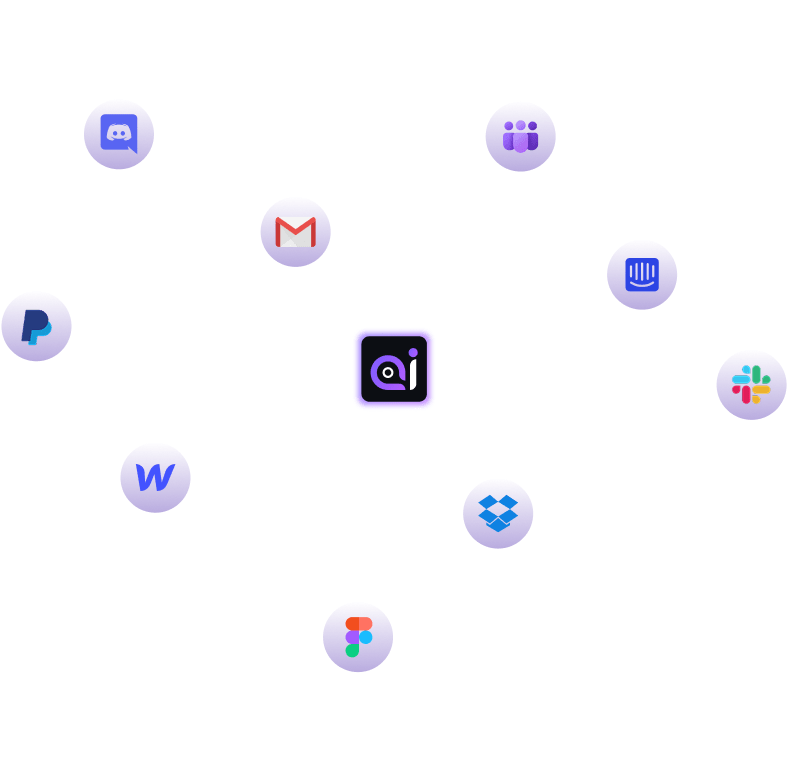
A conversation should not end with an answer. Eigenscape connects voice agents to the tools, teams, and workflows required to

move customers, employees, and operations forward.

Security & Compliance

Built For Enterprise
Governance, Privacy, And
Control

Voice AI systems often interact with customer information, operational data, and business
workflows. Eigenscape is designed with security, access control, auditability, and governance
principles that help organizations deploy AI responsibly while maintaining oversight, compliance,
and operational control.

What does SOC 2 alignment mean?

Eigenscape follows security, availability, access management, and operational control practices commonly associated with enterprise-grade environments. This helps organizations establish governance and accountability around AI-powered interactions.

Can the platform support healthcare environments?

The platform architecture can be configured to support healthcare use cases requiring privacy controls, secure access, auditability, and protected handling of sensitive information.

How does Eigenscape address privacy regulations?

The platform can support privacy-first deployment models aligned with major regulatory frameworks, including GDPR and India's Digital Personal Data Protection (DPDP) Act, helping organizations manage customer data responsibly.

Who can access platform data and workflows?

Access can be restricted based on organizational requirements, ensuring users only have visibility into the information, workflows, and functions relevant to their role.

Can platform activity be monitored and reviewed?

Comprehensive audit trails help organizations track user activity, workflow actions, configuration changes, and system events for operational visibility and governance.

How is information protected?

Data can be encrypted during transmission and storage to help protect customer conversations, business information, and operational records.

Can the platform be deployed in private environments?

Organizations with stricter security requirements can explore deployment architectures that support private cloud, dedicated infrastructure, or controlled hosting environments.

Does AI operate without supervision?

No. Organizations retain control over escalation rules, approval workflows, intervention thresholds, and human review processes where required.

How long is information stored?

Retention policies can be configured according to organizational, operational, and regulatory requirements to support governance and compliance objectives.

Can permissions be assigned by role?

Yes. Administrative, operational, managerial, and support users can be assigned different permission levels to maintain governance and operational separation.

Why Eigenscape

The Difference Between A
Demo And A Deployment

Many voice AI solutions can answer questions. Far fewer can operate reliably within customer
service, sales, operations, and enterprise workflows. Eigenscape combines production-tested
architecture, multi-agent orchestration, business integrations, and measurable outcomes to
help organizations deploy voice AI with confidence.

Production-Tested Platform

Built and validated through real-world enterprise deployments rather than controlled demonstrations.

  • 10,000+ conversations processed
  • Live operational environments
  • Proven production performance

Multi-Agent Architecture

Built and validated through real-world enterprise deployments rather than controlled demonstrations.

  • Intelligent agent handoffs
  • Context continuity
  • Complex workflow automation

Enterprise Integrations

Connect conversations directly to CRM systems, support platforms, communication tools, scheduling systems, and business workflows.

  • Fewer manual processes

  • Connected business operations

  • Faster execution

Real Business Outcomes

The platform is measured by operational and commercial performance, not by AI activity alone.

  • 23% conversion rate achieved

  • 40% reduction in human agent load

  • +18-point NPS improvement

India & US Deployments

Designed for organizations operating across different markets, customer expectations, business processes, and regulatory environments.

  • Diverse deployment experience

  • Multi-market understanding

  • Scalable operational models

Built By AI Product Engineers

The platform is engineered as a product ecosystem, not assembled from disconnected AI tools.

  • Platform-first architecture

  • Long-term scalability

  • Continuous innovation capability

[ Compliance & Governance ]

AI Built for Control, Privacy, and
Responsible Use

Multi-Agent Architecture

Multi-Agent Architecture

Scalability

Scalability

Operational Reliability

Operational Reliability

Conversation Accuracy

Conversation Accuracy

Response Latency

Response Latency

Context Retention

Context Retention

Agent Handoffs

Agent Handoffs

Escalation Quality

Escalation Quality

Integration Capability

Integration Capability

Compliance Readiness

Compliance Readiness

Cost Efficiency

Cost Efficiency

Business Outcomes

Business Outcomes

A Practical
Guide To
Evaluating
Enterprise
Voice AI
Platforms

Selecting a Voice AI platform is not simply a technology decision. It impacts customer service, revenue operations, workforce efficiency, scalability, and business performance. These answers are designed to help decision-makers evaluate Voice AI with greater clarity and confidence.

What is an AI Voice Agent?

An AI Voice Agent is a conversational AI system that can answer calls, understand spoken language, respond naturally, execute business workflows, and maintain context throughout a conversation. Unlike traditional IVR systems, AI Voice Agents can engage in dynamic, human-like interactions rather than relying on fixed menus and scripted responses.

What is an AI Voice Agent Platform?

An AI Voice Agent Platform is the infrastructure that powers AI-driven voice conversations across customer service, sales, support, appointment scheduling, collections, distributor engagement, and other business operations. It combines speech recognition, language understanding, decision-making, workflow automation, and voice generation into a single operational system

How is an AI Voice Agent different from a chatbot?

Chatbots primarily operate through text-based interactions. AI Voice Agents handle real-time phone conversations using speech recognition, conversational intelligence, workflow execution, and voice synthesis. They can answer calls, manage conversations, perform actions, and transfer context to human teams when required.

What does Eigenscape's AI Voice Agent Platform do?

Eigenscape's platform enables businesses to automate inbound and outbound voice interactions while maintaining natural conversations and business context. The platform can qualify leads, schedule appointments, answer customer questions, track orders, engage distributors, support collections workflows, and escalate conversations to human teams when necessary.

Can AI Voice Agents replace human call center teams?

AI Voice Agents are designed to automate repetitive, high-volume interactions while allowing human teams to focus on complex, sensitive, or high-value conversations. Most organizations use AI Voice Agents alongside human teams to improve service coverage, efficiency, and scalability.

How accurate is voice recognition?

Modern speech recognition systems can achieve very high accuracy under normal call conditions. Eigenscape uses advanced speech recognition architecture designed to handle natural conversations, accents, interruptions, and real-world calling environments.

Can the platform understand multiple languages and accents?

Yes. The platform can be configured to support multiple languages, regional dialects, and accent variations depending on business requirements and deployment needs.

How does the platform maintain conversation context?

The platform uses structured memory and dialogue state tracking to remember previous interactions, customer responses, conversation objectives, and workflow status throughout the call. This allows conversations to remain coherent across multiple turns and agent transitions.

What is a multi-agent voice architecture?

Multi-agent architecture allows specialized AI agents to collaborate during a conversation. For example, a Reception Agent can answer the call, transfer the conversation to a Sales Agent for qualification, then pass it to a Scheduling Agent to book an appointment while preserving context throughout the interaction.

Why is multi-agent architecture important?

Most voice systems struggle when conversations move between departments or objectives. Multi-agent systems allow businesses to handle complex workflows without forcing customers to repeat information or restart conversations.

What happens if the AI cannot answer a question?

The platform can trigger human escalation workflows, transfer the conversation to an appropriate team member, or create follow-up actions while preserving conversation history and context.

What is human escalation?

Human escalation is the process of seamlessly transferring a conversation from an AI Voice Agent to a human representative when predefined business rules, confidence thresholds, compliance requirements, or customer requests require human intervention.

Can the platform make outbound calls?

Yes. The platform supports outbound calling for lead qualification, appointment reminders, customer follow-ups, collections, distributor engagement, surveys, customer retention programs, and sales outreach.

Can AI Voice Agents qualify leads?

Yes. AI Voice Agents can ask qualification questions, identify customer intent, collect information, score opportunities, and route qualified leads to the appropriate sales teams.

Can the platform schedule appointments automatically?

Yes. AI Voice Agents can check availability, confirm schedules, send reminders, update calendars, and manage appointment-related workflows without manual intervention.

Can the platform integrate with CRM systems?

Yes. The platform can integrate with CRM, ERP, ticketing systems, customer databases, communication platforms, scheduling tools, and other business applications to automate workflows and maintain data consistency.

Which business systems can be integrated?

Typical integrations include Salesforce, HubSpot, Zoho CRM, Microsoft Dynamics, SAP, Oracle, ServiceNow, Zendesk, Freshdesk, Google Workspace, Microsoft 365, WhatsApp, ERP systems, custom APIs, and proprietary enterprise platforms.

What industries use AI Voice Agents?

AI Voice Agents are increasingly used across healthcare, education, real estate, financial services, insurance, retail, ecommerce, manufacturing, logistics, telecommunications, hospitality, automotive, and professional services.

How does AI Voice Automation reduce operational costs?

By automating repetitive interactions, reducing call handling requirements, increasing service capacity, improving response times, and extending service availability without proportional increases in staffing requirements.

How does the platform improve customer experience?

AI Voice Agents provide immediate responses, reduce waiting times, maintain service consistency, operate 24/7, and help customers complete tasks faster without navigating complex phone menus.

What is voice-to-voice latency?

Voice-to-voice latency measures the time between a customer's spoken input and the AI's spoken response. Lower latency creates more natural conversations and reduces friction during customer interactions.

What is considered good voice latency?

Enterprise-grade conversational systems typically target sub-second response times. Eigenscape's architecture is designed for end-to-end voice latency below 800 milliseconds to support natural conversation flow.

What is barge-in detection?

Barge-in detection allows the AI to recognize when a customer starts speaking before the AI has finished responding. This creates more natural conversations by preventing interruptions from disrupting the interaction.

How does the platform handle interruptions?

The system continuously tracks conversation state, customer intent, and dialogue flow so that interruptions, topic changes, and follow-up questions can be managed without losing context.

Is the platform secure?

Yes. Security controls can include encryption, access management, audit logging, role-based permissions, infrastructure controls, monitoring, and governance frameworks based on deployment requirements.

Is the platform compliant with enterprise requirements?

The platform can be configured to support enterprise governance requirements including access controls, auditability, data retention policies, security monitoring, and compliance-oriented deployment architectures.

Can the platform be deployed in private cloud environments?

Yes. Depending on business requirements, deployments can be configured for public cloud, private cloud, hybrid environments, or enterprise-specific infrastructure models.

How quickly can an AI Voice Agent be deployed?

Deployment timelines depend on workflow complexity, integrations, compliance requirements, and business objectives. Initial use cases can often be launched significantly faster than traditional call center transformation initiatives.

Still Have Questions?

Can’t find the answer you’re looking for? Please chat to our friendly team

[email protected]

News & Blog

Recent our
recent articles